


11
2022
-
05
Design Type and Maintenance of DTH Bit
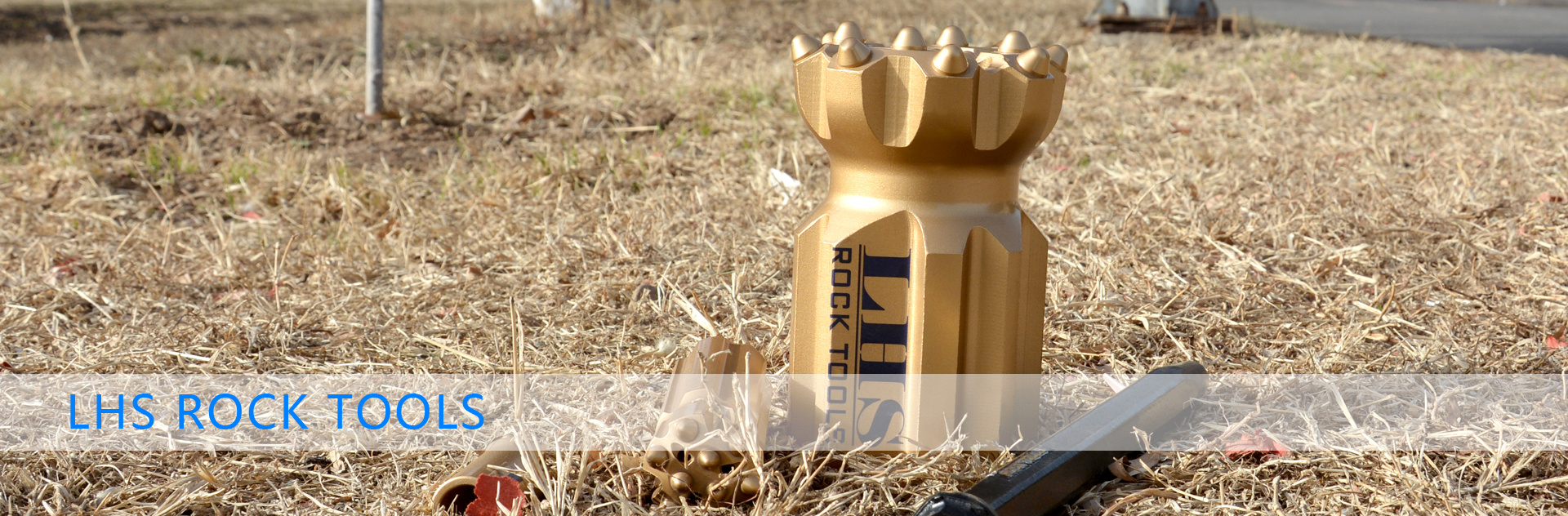
At present, there are four main end face designs of high wind pressure DTH drills: convex end face, flat end face, concave end face and deep concave center end face. Cemented carbide is mostly made of spherical teeth, elastic teeth or both spherical teeth and elastic teeth.
Current high wind pressureDTH BITThere are four main types of end face design: convex end face, flat end face, concave end face and deep concave center end face. Cemented carbide is mostly made of spherical teeth, elastic teeth or both spherical teeth and elastic teeth.

1. Convex type: This kind of down-the-hole drill is divided into two types: single boss and double boss, the latter is mainly used for DTH drill bits with larger diameter. The end-face DTH drill bit can maintain a high drilling speed when drilling medium-hard and hard abrasive rocks, but the drilling straightness is poor, which is not suitable for drilling engineering with high drilling straightness requirements.
2. Face plane type: This kind of down-the-hole drill is sturdy and durable, suitable for drilling hard and extremely hard rocks, as well as hard rocks and soft rocks that do not require high hole flatness.
3. Concave face type: The end face of this drill has a conical recess, which forms a slight nucleation effect during the drilling process to maintain the centering performance of the drill and the straightness of the drilled hole. This kind of drill has good powder discharge effect and fast drilling speed, and is a DTH drill widely used in the market at present.
4. Deep concave center type of end face: This type of drill bit is evolved from the same type of ball tooth drill bit, and the center of the end face of the drill bit has a deep concave center. It is used for nucleation in the process of rock drilling and can ensure the flatness of the blast hole when drilling deep holes. It is only suitable for drilling soft rock and medium hard rock.
DTH BITInstructions for use: 1. Choose DTH drill bits according to rock conditions (hardness, abrasiveness) and drilling rig types (high wind pressure, low wind pressure). Different forms of alloy teeth and tooth arrangements are suitable for drilling different rocks. Select the appropriate DTH drill Bit is the prerequisite for obtaining ideal application results. 2. When installing the down-the-hole drill bit, gently put the drill bit into the ferrule of the DTH impactor, and do not collide with force to avoid damaging the tail handle or ferrule of the drill bit; 3. During the drilling process, ensure that the air pressure of the DTH drill is sufficient. If the impactor works intermittently or the powder in the hole is not smooth, check the compressed air system of the DTH drill to ensure that there is no rock slag in the hole during drilling; 4. If any metal object is found to fall into the hole, it should be sucked out by a magnet or taken out by other methods to avoid damage to the drill bit; 5. When replacing the drill bit, pay attention to the size of the drill hole. If the drill bit diameter is excessively worn, but has not yet been drilled, the drill bit cannot be replaced to avoid sticking. Waste drill bits with approximately the same wear diameter can be used to complete the operation.
due to actual drilling and production conditions, or ifDTH BITIncorrect operation often results in wear patterns. If the drill bit is not judged in advance and reground before the wear cycle arrives, it will result in poor performance or early failure of the drill bit. Therefore, we should effectively maintain the drill bit and extend its service life.
RELATED INFORMATION
Pay attention to lotus mountain drilling tools:


Contact Us
Address: Lianhua Mountain, Yangjiazhangzi Economic and Technological Development Zone, Huludao City, Liaoning Province, China
Telephone:0086-429-4428053 0086-429-4428052

TikTok

WeChat Public Number
Privacy Policy Website construction:China Enterprise Power Jinzhou SEO Tags